The Chronicle of Georgia
The Chronicle of Georgia in Tbilisi
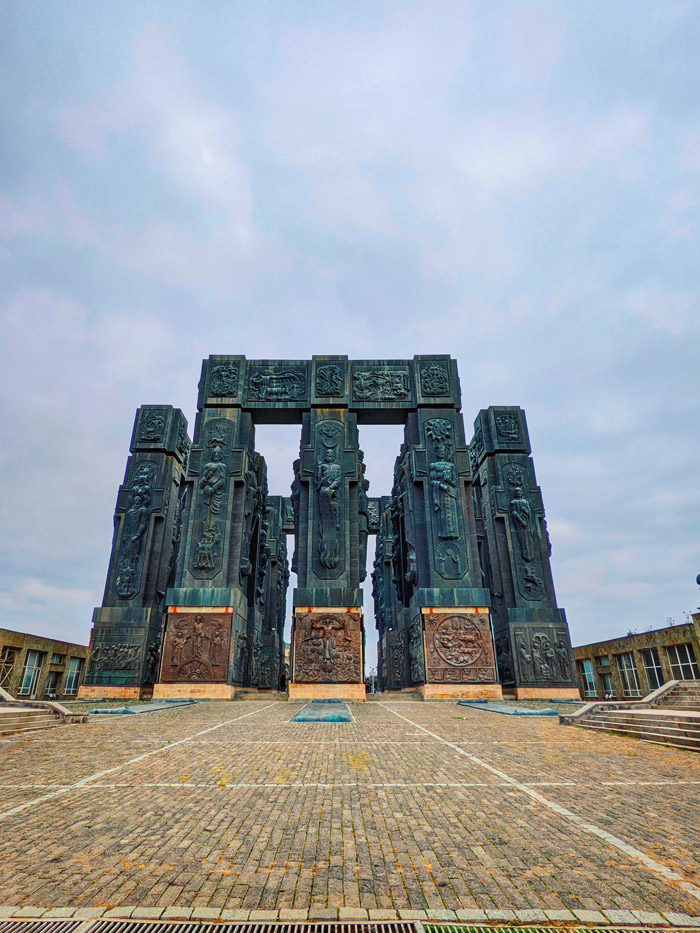
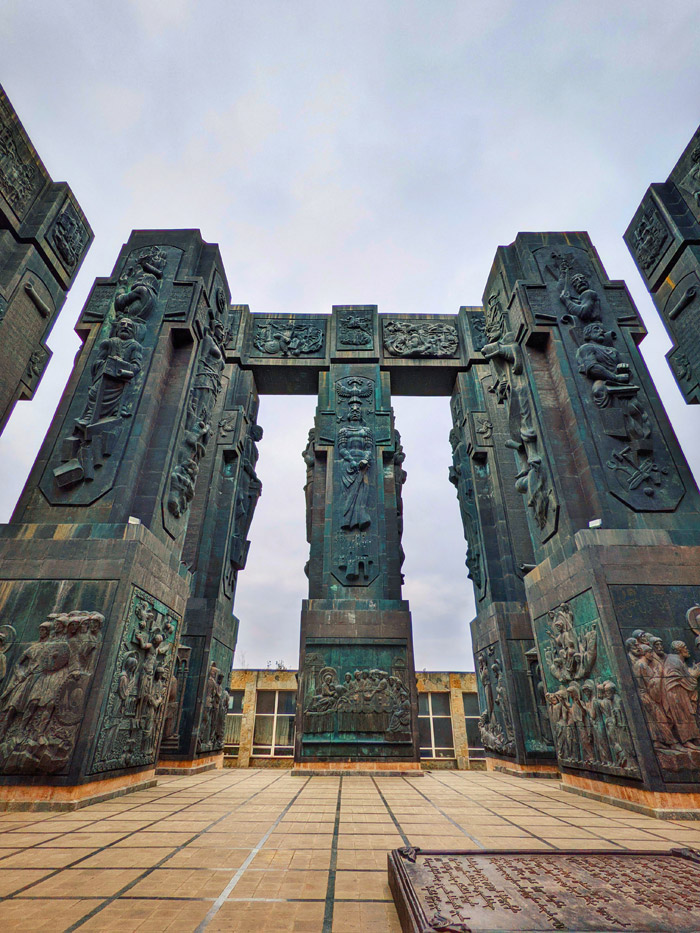
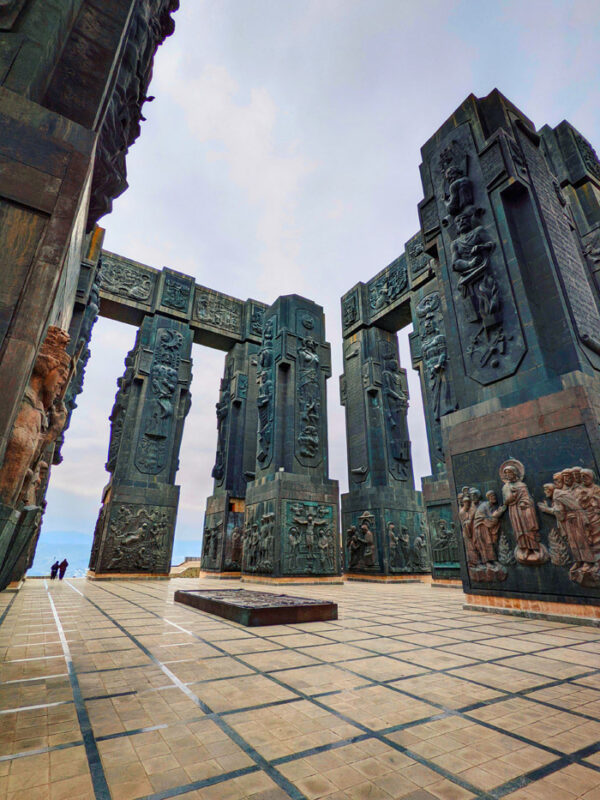
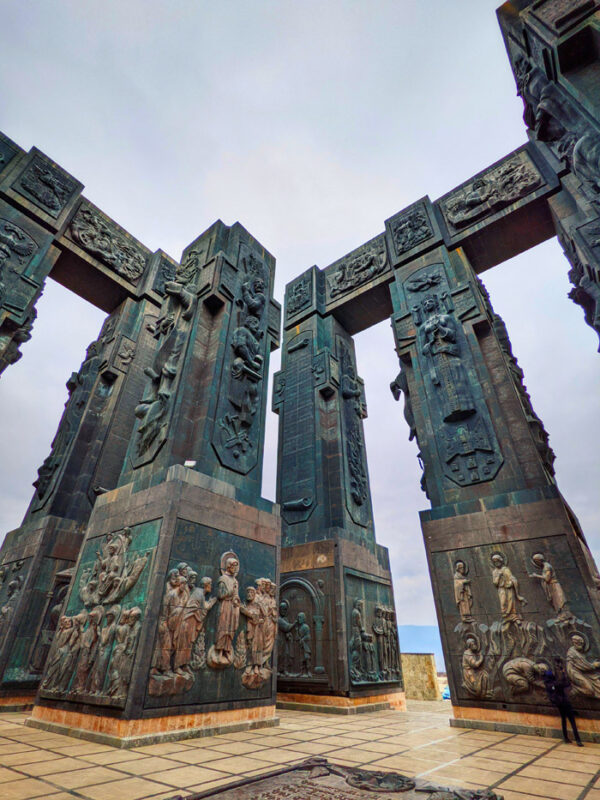
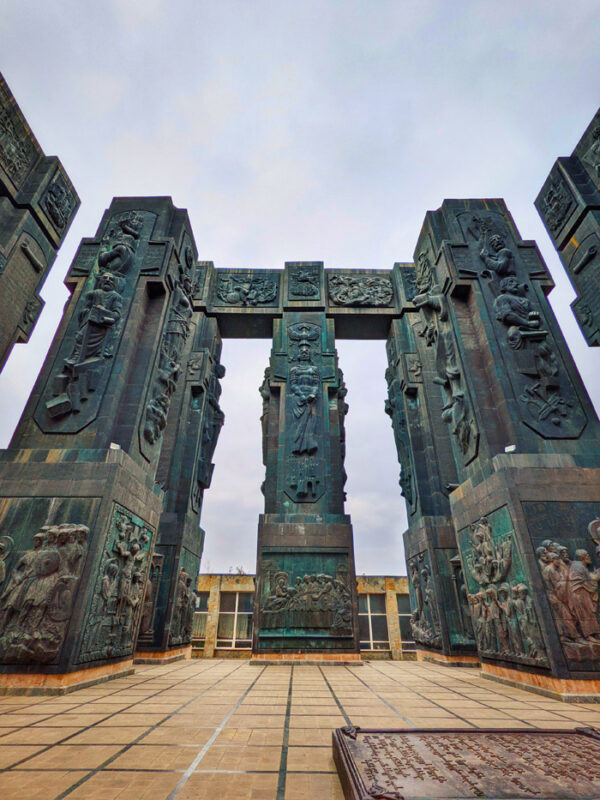
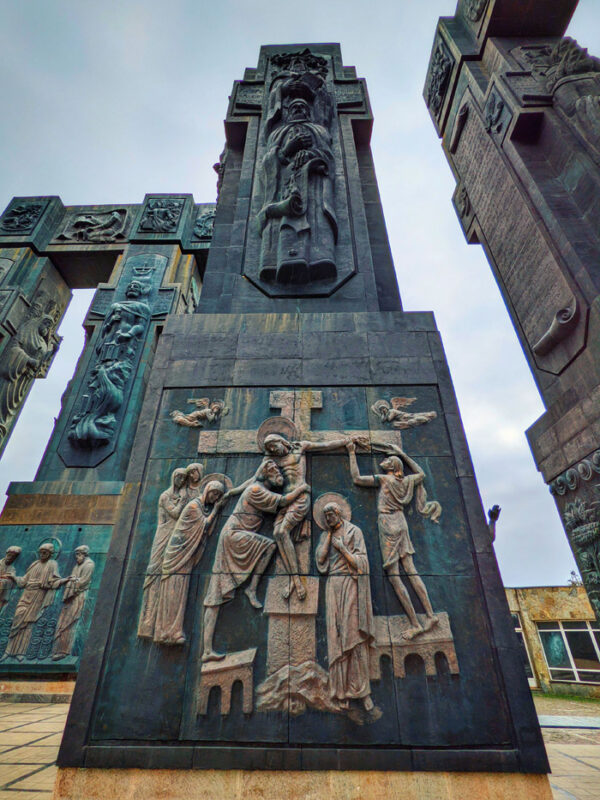
The Chronicle of Georgia is one of the largest and most unusual monuments in Tbilisi. Located on a hill above the Tbilisi Sea, the monumental complex tells the story of Georgia through enormous sculpted pillars depicting Georgian rulers, national heroes, religious figures and scenes from Christianity.
The monument was designed by Georgian sculptor Zurab Tsereteli, and construction began in 1985 during the Soviet period. Although the complex was never fully completed, it remains one of the most impressive examples of monumental art in Georgia.
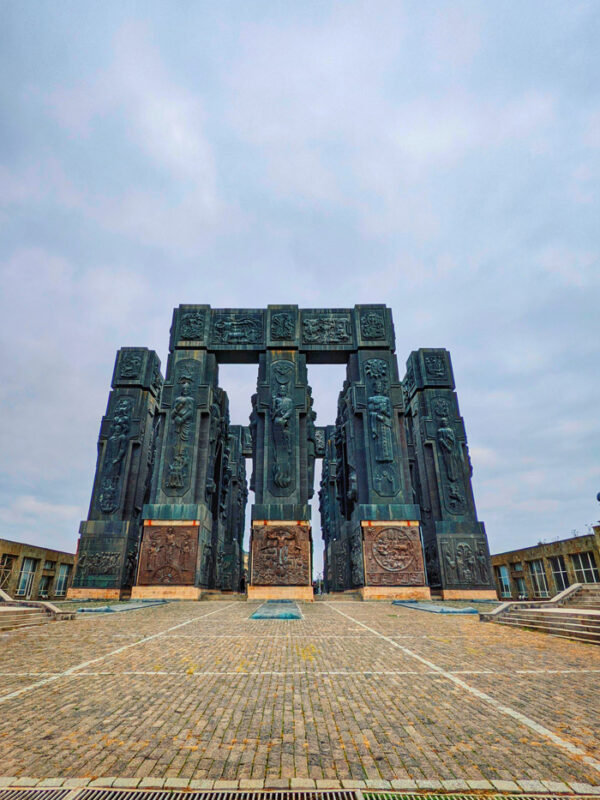
Because of its remote hilltop location, massive scale and dark metal surfaces, the site is sometimes informally called the “Georgian Stonehenge.”
Entrance is free, and the monument is also known for its panoramic views over the Tbilisi Reservoir and the northern districts of the city.
Chronicle of Georgia Quick Information
- Entrance fee: Free
- Opening hours: Open-air site, generally accessible 24 hours
- Recommended visit time: 45–90 minutes
- Location: Keeni Hill, near the Tbilisi Sea
- Best for: History, architecture, photography and panoramic views
- Created by: Zurab Tsereteli
- Construction began: 1985
- Main structure: 16 monumental pillars
- Pillar height: Approximately 30–35 metres
Although the monument is generally accessible throughout the day, visiting during daylight is safer and makes it easier to see the detailed reliefs. Google Maps currently lists the site as open 24 hours.
What Does the Chronicle of Georgia Represent?
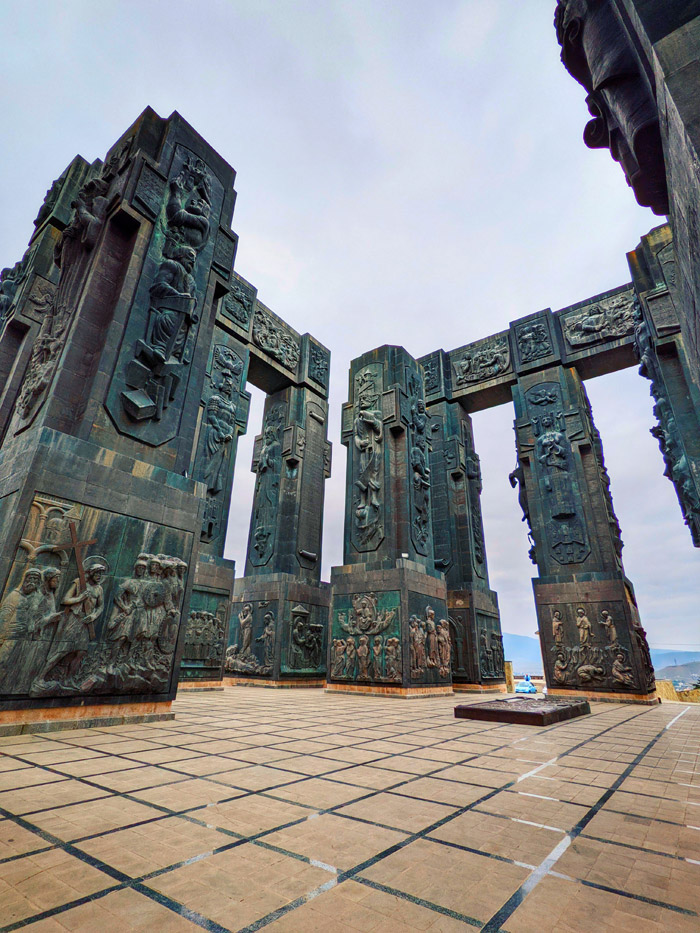
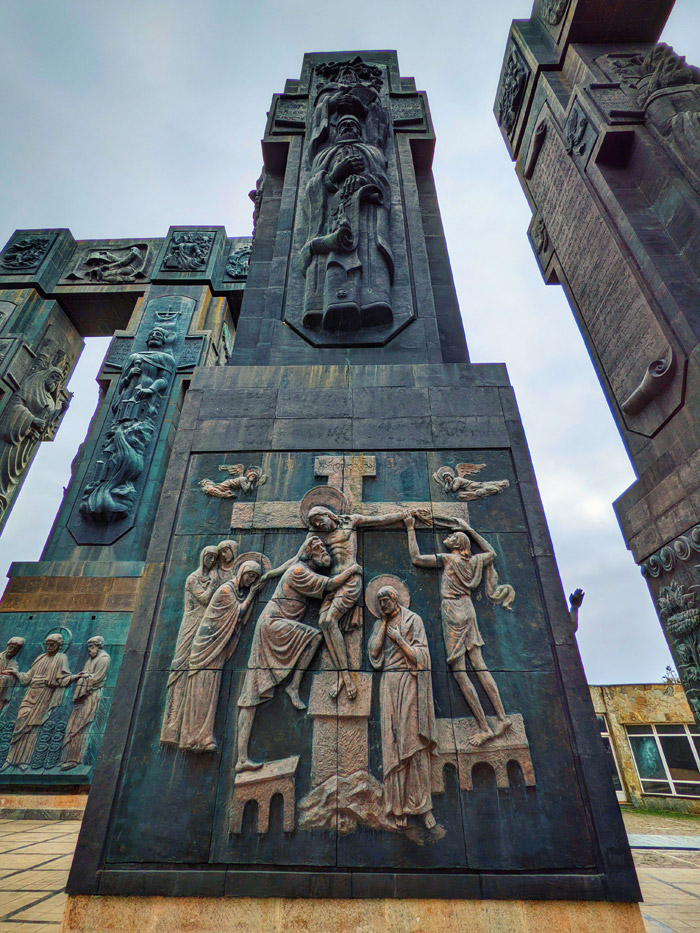
The Chronicle of Georgia was designed as a monumental visual history of the country. The sculpted pillars are divided into several thematic sections.
Georgian Kings, Queens and National Heroes
The middle sections of the monument depict important figures from Georgian history, including rulers, poets, warriors and saints.
Among the figures represented are:
- King David the Builder;
- Queen Tamar;
- King Mirian III;
- Georgian religious leaders;
- military heroes;
- cultural figures and writers.
The monument is not arranged like a traditional museum exhibition. There are few explanatory signs, so visitors without prior knowledge of Georgian history may not recognise every person or scene.
Scenes From Christianity
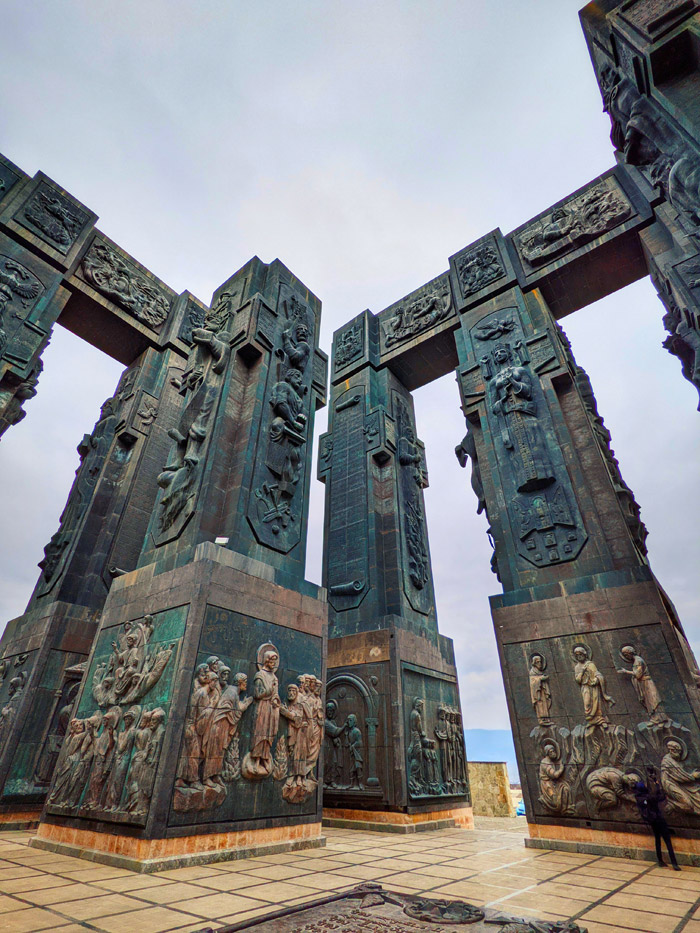
The lower sections of the pillars depict episodes from the life of Jesus Christ and biblical history. Christianity has played a central role in Georgian history and national identity, and this religious theme forms an important part of the monument’s design.
Georgian Culture and Everyday Life
Other reliefs represent traditional Georgian life, agriculture, grape harvesting and cultural traditions. Together, the different levels of the monument connect Georgia’s political history, Christianity and everyday national culture.
The Monument’s Architecture
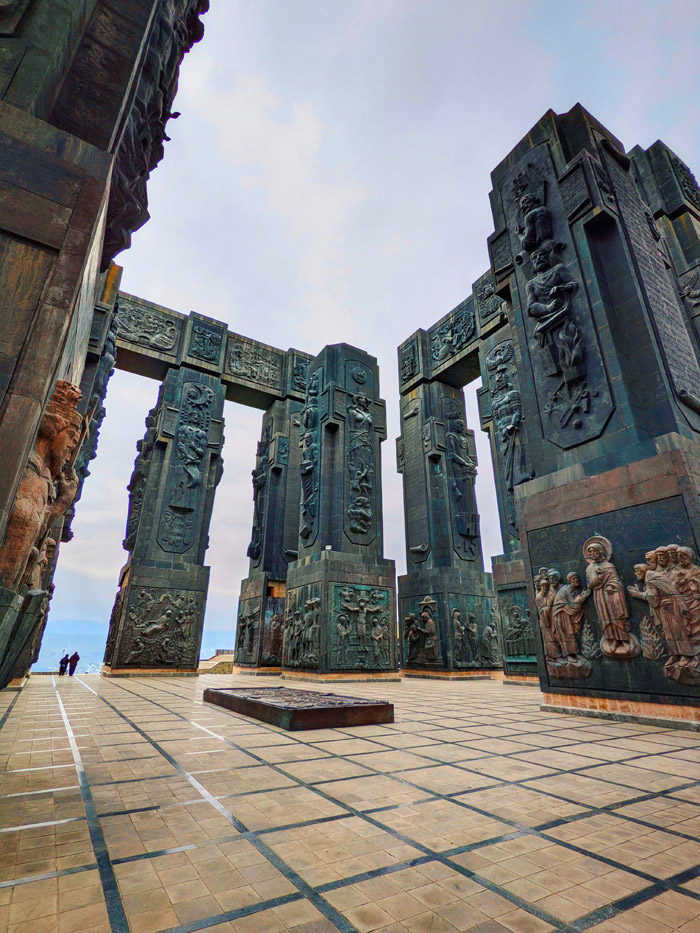
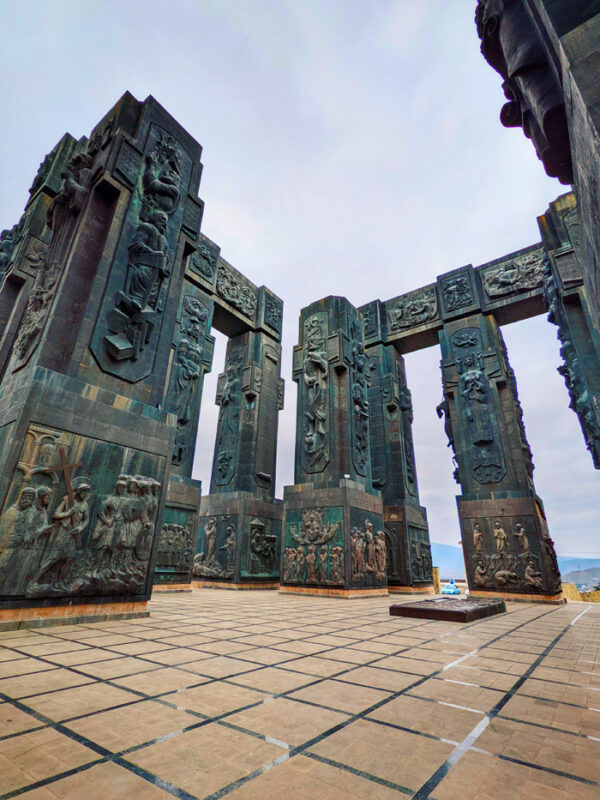
The main structure consists of 16 enormous copper and bronze-clad pillars, many of which rise approximately 30–35 metres above the platform.
The scale is difficult to understand from photographs. When standing between the pillars, visitors can see that some of the carved human figures are several metres tall.
The dark surfaces, narrow spaces between the pillars and dramatic shadows create a distinctive atmosphere, especially early in the morning or late in the afternoon.
A long staircase leads from the lower entrance towards the main monument. There are also two large decorative columns positioned near the approach.
Visitors can walk around and between the main pillars, but it is not possible to climb to the top of the monument.
The Annunciation Church
A small functioning church dedicated to the Annunciation stands near the main monument. Visitors may enter when the church is open, but should remember that it is an active religious space.
Inside and around the church:
- dress respectfully;
- keep noise low;
- avoid photographing people during prayer;
- follow any instructions from church staff.
The church adds a quieter and more spiritual element to the otherwise monumental complex.
Views Over the Tbilisi Sea
The Chronicle of Georgia stands on a hill overlooking the Tbilisi Sea, officially known as the Tbilisi Reservoir.
From the monument, visitors can see:
- the Tbilisi Reservoir;
- Temka and surrounding residential districts;
- northern Tbilisi;
- hills surrounding the city;
- parts of the Caucasus foothills during clear weather.
The view is particularly attractive around sunset, although the monument itself can become very dark after the sun goes down.
The location is exposed and often windy, even when the weather in central Tbilisi feels warm.
Is the Chronicle of Georgia Free?
Yes. There is currently no entrance fee for visiting the Chronicle of Georgia.
Visitors can walk around the monument, view the reliefs, enter the church when it is open and enjoy the surrounding viewpoints without purchasing a ticket.
There is normally no formal ticket office or controlled entrance.
Chronicle of Georgia Opening Hours
The Chronicle of Georgia is an outdoor monument and is generally accessible 24 hours a day. Google Maps currently also lists it as open 24 hours.
However, visiting during daylight is recommended because:
- the stairs can be difficult to see at night;
- lighting may be limited in some areas;
- public transport is less convenient late in the evening;
- the detailed carvings are easier to examine during the day;
- the location is relatively isolated.
The small church may have separate and variable opening hours.
How to Get to the Chronicle of Georgia
The monument is located outside the historic centre, near the Temka district and the Tbilisi Sea. It is not within comfortable walking distance of Old Tbilisi, Freedom Square or Rustaveli Avenue.
By Taxi
For most tourists, a taxi or ride-hailing application is the easiest way to reach the Chronicle of Georgia. From central Tbilisi, the journey normally takes approximately 20–30 minutes, depending on traffic and your starting location.
Enter one of the following names in the application:
- Chronicle of Georgia
- Chronicles of Georgia
Make sure the destination marker is located on the hill above the Tbilisi Sea.
The road reaches a parking and drop-off area close to the monument, although visitors must still walk and climb some stairs.
By Public Transport
Reaching the monument by public transport is possible but less convenient.
Bus routes and stop locations may change, so it is safer to check a live journey planner on the day of your visit rather than relying on a permanently published route number.
Some current journey planners show connections involving the Tbilisi Sea area and bus route 360, but a walk uphill or a transfer may still be required.
For tourists unfamiliar with Tbilisi’s outer districts, taking a taxi at least for the uphill journey is usually the simpler option.
Returning to the City
The monument is in a relatively isolated location, and taxis may not always be waiting nearby. Order your return taxi through an application rather than expecting to find one at the entrance. Mobile internet is useful because there is no permanent taxi rank.
Accessibility
The Chronicle of Georgia is not fully accessible for visitors with limited mobility.
Important considerations include:
- a long staircase leading towards the main structure;
- uneven paving in some areas;
- sloped approaches;
- limited handrails;
- no lift to the main upper platform;
- few places to sit.
A vehicle can approach relatively close to the monument, but reaching all areas may still be difficult for wheelchair users or visitors who cannot climb stairs.
Best Time to Visit
Morning
Morning is a good choice for:
- fewer visitors;
- softer light;
- cooler temperatures in summer;
- clearer photographs without large groups.
Late Afternoon
Late afternoon offers warmer light on the bronze surfaces and more dramatic shadows between the pillars.
Sunset
Sunset provides attractive views over the Tbilisi Sea, but allow enough time to walk around the monument before it becomes dark.
Avoiding Summer Heat
There is little shade around the main structure. During summer, avoid the hottest hours of the afternoon and carry drinking water.
What to Bring
Bring:
- drinking water;
- comfortable walking shoes;
- sun protection in summer;
- a light jacket during windy weather;
- a charged phone;
- mobile internet for ordering a return taxi.
There are limited shops, cafés and tourist facilities immediately beside the monument, so do not rely on buying water or food at the site.
Photography Tips
The Chronicle of Georgia is one of the best photography locations in Tbilisi because of its scale and unusual architecture.
For better photographs:
- include a person in the frame to show the size of the pillars;
- photograph the monument from the lower staircase;
- use wide-angle compositions between the columns;
- visit in late afternoon for stronger shadows;
- photograph the Tbilisi Sea from the viewing side;
- avoid photographing directly into the sun around midday.
Drone regulations and local restrictions may apply, so check current Georgian aviation rules before flying a drone.
Is the Chronicle of Georgia Worth Visiting?
The Chronicle of Georgia is worth visiting for travellers interested in:
- Georgian history;
- Soviet-era monumental art;
- architecture;
- Christianity;
- photography;
- unusual attractions outside central Tbilisi;
- panoramic views.
However, it is located away from most central attractions and requires additional travel time.
For visitors spending only one day in Tbilisi, Old Tbilisi, Narikala Fortress and the Sulfur Baths may be a higher priority. The Chronicle of Georgia is better suited to visitors with at least two or three days in the city or those looking for less touristy locations.
Local Tip
Visit the Chronicle of Georgia in the late afternoon, then continue towards the Tbilisi Sea or return to the city before it becomes fully dark.
Ask your taxi driver to wait only when necessary, as waiting fees can increase the cost. In most cases, ordering a new car through an application after your visit is easier.
FAQ
What is the Chronicle of Georgia?
The Chronicle of Georgia is a monumental sculptural complex in Tbilisi depicting Georgian rulers, national heroes, cultural traditions and scenes from Christianity.
Who created the Chronicle of Georgia?
The monument was designed by Georgian sculptor Zurab Tsereteli. Construction began in 1985.
Is the Chronicle of Georgia finished?
The monument is generally considered unfinished, although the main monumental structures can be visited.
How tall is the Chronicle of Georgia?
The largest pillars are approximately 30–35 metres tall.
How many pillars does the monument have?
The central monumental structure consists of 16 enormous pillars.
Is the Chronicle of Georgia free?
Yes. There is currently no entrance fee.
Is the Chronicle of Georgia open 24 hours?
The outdoor complex is generally accessible 24 hours, but visiting during daylight is recommended.
Can visitors climb to the top of the monument?
No. Visitors can walk around and between the pillars, but cannot climb to the top of the monumental structure.
How long should I spend there?
Most visitors need approximately 45–90 minutes.
How far is it from central Tbilisi?
The monument is in northern Tbilisi. A taxi journey from the city centre usually takes approximately 20–30 minutes, depending on traffic.
Is public transport available?
Public transport can take you to the surrounding Tbilisi Sea and Temka area, but the final section may involve walking uphill. Check a live route planner before travelling.
Is it suitable for children?
Children can visit, but parents should supervise them around stairs, elevated areas and uneven surfaces