
Open Air Museum of Ethnography

Whole Georgian culture in one place

The Open Air Museum of Ethnography in Tbilisi is one of the best places to experience Georgia’s regional architecture, traditional homes and rural way of life without leaving the capital.

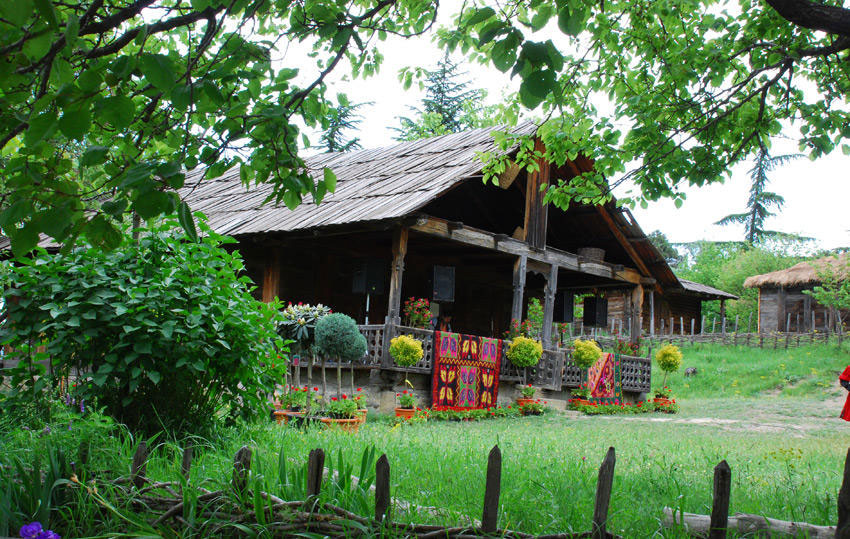
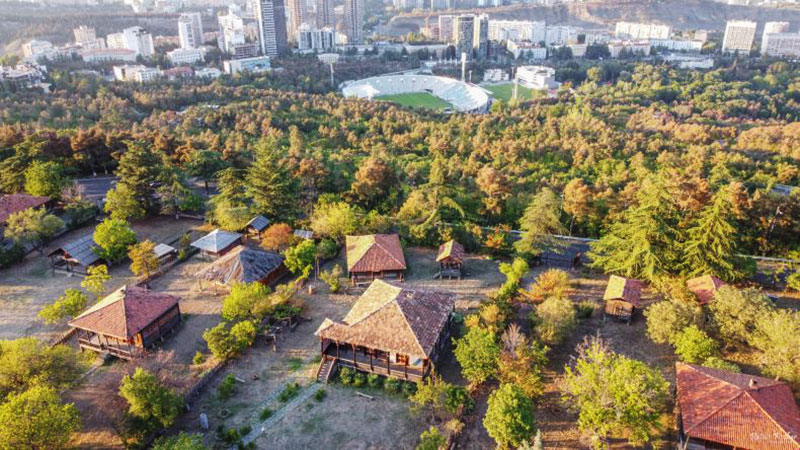
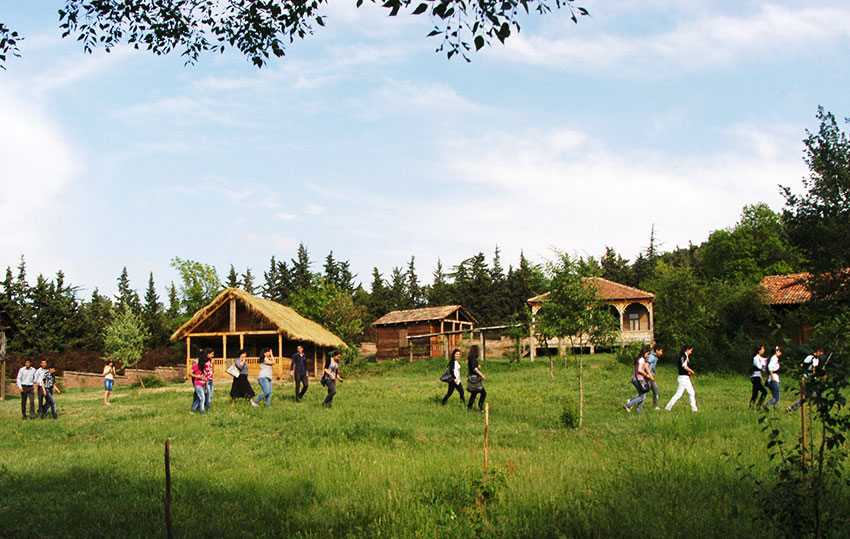
Spread across a wooded hillside near Turtle Lake, the museum resembles a large historical village. Original houses and agricultural buildings from different parts of Georgia have been transferred, reconstructed and furnished here, allowing visitors to walk through centuries of Georgian domestic life.

It is officially named the Giorgi Chitaia Open Air Museum of Ethnography and forms part of the Georgian National Museum network.

A Miniature Journey Through Georgia

The museum was founded in 1966 on the initiative of Georgian ethnographer Giorgi Chitaia. It was the first open-air ethnographic museum of its kind in the Caucasus.

Its territory covers approximately 52 hectares and is divided into 11 zones. Around 70 traditional houses, farm buildings and historical structures represent Georgia’s different geographical and cultural regions.

Visitors can explore architecture and household traditions associated with:

  • Kartli;
  • Kakheti;
  • Samtskhe-Javakheti;
  • Imereti;
  • Guria;
  • Samegrelo;
  • Adjara;
  • Abkhazia;
  • Racha-Lechkhumi;
  • Svaneti.

The layout also reflects Georgia’s contrasting landscapes, progressing from lowland and agricultural settlements towards buildings associated with mountainous regions.

What to See at the Open Air Museum

Traditional Georgian Houses

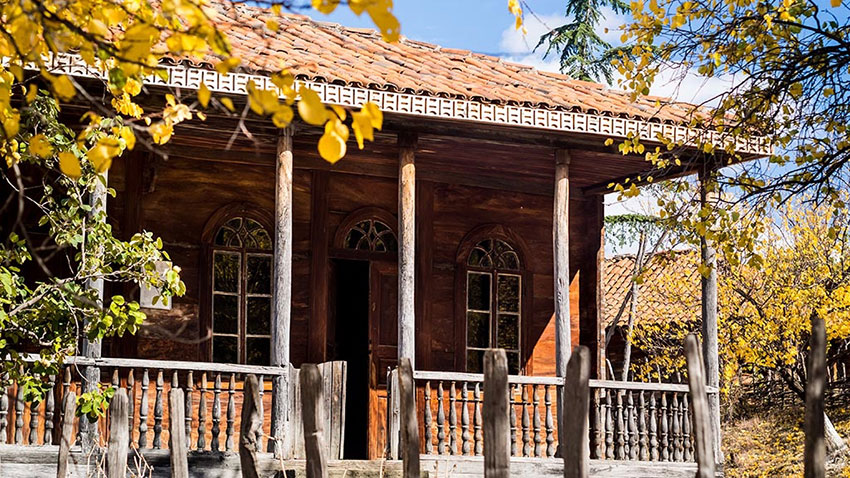
The museum’s main attractions are its traditional residential buildings. Their construction materials and design differ according to the climate, landscape and lifestyle of each region.

Western Georgian houses often feature elevated wooden structures, decorative balconies and steep roofs adapted to a wetter climate. Buildings from eastern Georgia commonly use stone, brick and earth-based construction.

Several houses contain original furniture, textiles, pottery, agricultural tools and everyday household objects.

The Traditional Darbazi House

One of the most distinctive architectural forms is the traditional eastern Georgian darbazi house.

Its interior is organised around a central hearth beneath a stepped wooden ceiling. An opening at the top allowed smoke to escape while also bringing daylight into the living space.

The darbazi demonstrates how architecture, heating, food preparation and family life were combined within a single carefully designed structure.

Mountain Architecture

The highland section introduces visitors to the defensive and residential architecture of mountainous Georgia.

Stone towers, fortified homes and agricultural structures help explain how communities adapted to isolation, severe winters and the security challenges of mountain life.

Wine Cellars and Agricultural Buildings

Traditional wine cellars, known as marani, demonstrate the importance of winemaking in Georgian family and agricultural life.

Depending on which buildings are open during your visit, you may also see traditional wine vessels, grain storage structures, watermills, barns and tools used for farming and food production.

Historical and Archaeological Monuments

The museum is not limited to residential architecture. Its historical section includes:

  • a reconstructed early Christian Sioni basilica dating from approximately the 5th–6th centuries;
  • a prehistoric dolmen transferred from Abkhazia;
  • a collection of carved gravestones and other archaeological objects.

These exhibits place traditional village life within the wider history of Georgia.

Crafts and Cultural Events

The museum occasionally hosts traditional craft demonstrations, workshops, educational activities and cultural festivals.

Programs may include pottery, weaving, woodcarving, metalwork, folk music and traditional food preparation. Events are seasonal, so check the official Georgian National Museum website before visiting.

Practical Visitor Information

Official name: Giorgi Chitaia Open Air Museum of Ethnography
Address: 25 Merab Berdzenishvili Street, Turtle Lake Road, Tbilisi
Opening hours: Tuesday–Sunday, 10:00–18:00
Last admission: 17:30
Closed: Mondays and official public holidays
Recommended visit time: 2–3 hours
Telephone: +995 32 272 90 45 / 46
Email: info@museum.ge

The museum is almost entirely outdoors. Opening hours, access to individual buildings and scheduled activities may occasionally be affected by weather, restoration work or special events.

Open Air Museum of Ethnography Ticket Price

Recent visitors have reported an admission price of approximately 20 GEL for a foreign adult visitor.

However, the museum’s official tariff page still displays an older, time-qualified price, and current admission information is not presented consistently online. Treat the 20 GEL price as indicative and confirm it by telephone or through the official museum website shortly before visiting.

Reduced admission may be available for students, school pupils and other eligible visitors. Bring a valid student card or other supporting document if you plan to request a discount.

Children under six and visitors covered by the museum’s free-admission categories may enter without charge when the required documentation is presented.

How to Get to the Open Air Museum of Ethnography

The museum is located on a hillside above Tbilisi’s Vake district. It is not within convenient walking distance of the city centre.

By Taxi

A taxi is the easiest option for most visitors.

Enter “Giorgi Chitaia Open Air Museum of Ethnography” or “25 Merab Berdzenishvili Street” as the destination in your taxi application. Check that the pin leads to the museum’s main entrance rather than directly to Turtle Lake.

Read the guide to online taxi apps in Georgia before ordering a car.

By Public Transport

Public buses serve the surrounding Vake and Turtle Lake areas, but there is no metro station or particularly convenient bus stop directly beside the museum entrance. The final part of the journey may involve an uphill walk.

Routes can change, so use the official Tbilisi Transport Company journey planner or a live navigation application on the day of your visit.

For fares, cards and payment methods, see the complete guide to public transport in Tbilisi.

From Turtle Lake by Cable Car

The scenic cable car from Vake Park takes passengers up to Turtle Lake.

It is possible to continue towards the museum on foot, but the cable-car station is not directly beside the museum’s main entrance. The walk can involve sloping roads and uneven paths, and a closer side entrance may not always be open.

Check the route carefully before setting out and do not assume that the nearest gate shown on a map will provide visitor access.

By Car

Visitors arriving by car should navigate to the official address on Merab Berdzenishvili Street. Road conditions and parking availability can vary during weekends, festivals and large cultural events.

Best Time to Visit

Spring and early autumn usually offer the most comfortable weather for exploring the museum.

Summer is also attractive because the hillside is greener and cultural events are more frequent, but afternoons can be hot. Arrive in the morning, carry drinking water and use sunscreen.

Rain can make some paths muddy or slippery, while snow and cold weather may limit access to individual buildings during winter.

Weekends can be more interesting if demonstrations or cultural activities are taking place. Weekdays are generally quieter.

Useful Tips for Visitors

  • Wear comfortable shoes with good grip.
  • Bring water during warm weather.
  • Allow at least two hours for the main sections.
  • Carry sun protection because not every area is shaded.
  • Ask museum staff which houses are open that day.
  • Contact the museum in advance if you want a guided visit in English.
  • Keep in mind that the site contains slopes, steps and uneven ground.
  • Confirm accessibility arrangements directly with the museum if a visitor has limited mobility.
  • Avoid arriving close to 17:30, as the large territory cannot be explored properly in a short visit.

Combine the Museum with Turtle Lake

The Open Air Museum of Ethnography and Turtle Lake can be combined into a relaxed half-day itinerary.

Visit the museum in the morning, then continue to Turtle Lake for a walk, a café or views over the city. Because the museum entrance and the lake are at different points on the hillside, check the walking route or use a short taxi ride if necessary.

Read the complete Turtle Lake visitor guide before planning the combination.

Travellers interested in exploring more of Georgia’s history can also visit the Georgian National Museum in central Tbilisi. The two museums complement each other: the National Museum focuses more on archaeology, historical collections and political history, while the Open Air Museum presents traditional architecture and everyday life.

Is the Open Air Museum of Ethnography Worth Visiting?

Yes, especially for visitors interested in architecture, folk culture, photography or Georgian regional traditions.

Unlike a conventional indoor museum, this site allows visitors to enter a landscape shaped like a historical village. Moving between wooden houses, stone buildings, wine cellars and farm structures gives a clearer impression of how differently people lived across Georgia.

It is also a peaceful alternative to the busy attractions of central Tbilisi. However, the experience is best for visitors who are comfortable walking over a large and occasionally uneven outdoor area.

FAQ

What are the Open Air Museum of Ethnography opening hours?

The official opening hours are Tuesday–Sunday from 10:00 to 18:00. Last admission is at 17:30. The museum is closed on Mondays and official public holidays.

How much is admission?

Recent visitors report approximately 20 GEL for a foreign adult. Because the museum’s official page still displays older tariff information, confirm the current price before visiting.

How long do I need at the museum?

Allow approximately two to three hours. Visitors particularly interested in architecture and regional history may want to stay longer.

Can I visit without a guide?

Yes. The museum can be explored independently. However, explanations inside the houses can add valuable context, and guided services may be available in English when arranged in advance.

Is the museum suitable for children?

Yes, especially for children who enjoy outdoor spaces and exploring traditional houses. Younger children should be supervised because the territory is large and contains slopes and uneven paths.

Is the museum wheelchair accessible?

Accessibility is limited by the natural hillside, steps and uneven surfaces. Contact the museum before visiting to ask which sections can be reached comfortably.

Can I walk from Turtle Lake?

Yes, but the route is not as direct as it appears on some maps. The main entrance is lower on the hillside, and a nearby side gate may not always be open.

Is the museum open during rain?

The museum may remain open, but rain can make paths slippery and individual buildings may have limited access. Check the weather and contact the museum during severe conditions

Opening hours: Tuesday–Sunday, 10:00–18:00 Last admission: 17:30 Closed - Monday, and official holiday

What are you interested in? Discover something nice

What are you interested in? Discover something nice