
Museum of illusions Tbilisi

Tbilisi, the main place of illusions!

Museum of Illusions Tbilisi: Tickets, Hours & Visitor Guide

The Museum of Illusions Tbilisi is an interactive attraction in the heart of Old Tbilisi, where optical tricks, immersive rooms and perspective-changing installations challenge the way you see the world around you.

Unlike a traditional museum, this is a place where visitors are encouraged to participate, experiment and take photographs. The experience combines entertainment with simple explanations of vision, perception and the way the brain interprets visual information.

Located on Betlemi Street, the museum is easy to include in a day of exploring the historic centre. It is particularly popular with families, couples, groups of friends and travelers looking for an indoor activity during hot, cold or rainy weather.

Museum of Illusions Tbilisi: Quick Information

  • Address: 10 Betlemi Street, Old Tbilisi
  • Opening hours: Tuesday–Sunday, 11:00–21:00
  • Closed: Monday
  • Adult ticket for non-citizens: 50 GEL
  • Child ticket for non-citizens, ages 4–18: 40 GEL
  • Family ticket for non-citizens, 2 adults and 2 children: 130 GEL
  • Children under 4: Free
  • Recommended visit time: Approximately 45–90 minutes
  • Telephone: +995 596 04 74 74
  • Tickets: The official website currently states that tickets can be purchased at the entrance

Ticket prices, opening hours and admission rules may change. Check the museum’s official visitor information shortly before your visit.

The official price list describes adult admission as ages 18+ and child admission as ages 4–18, creating an overlap at age 18. If a visitor in your group is exactly 18, confirm the applicable ticket category directly with the museum.

What to Expect Inside the Museum

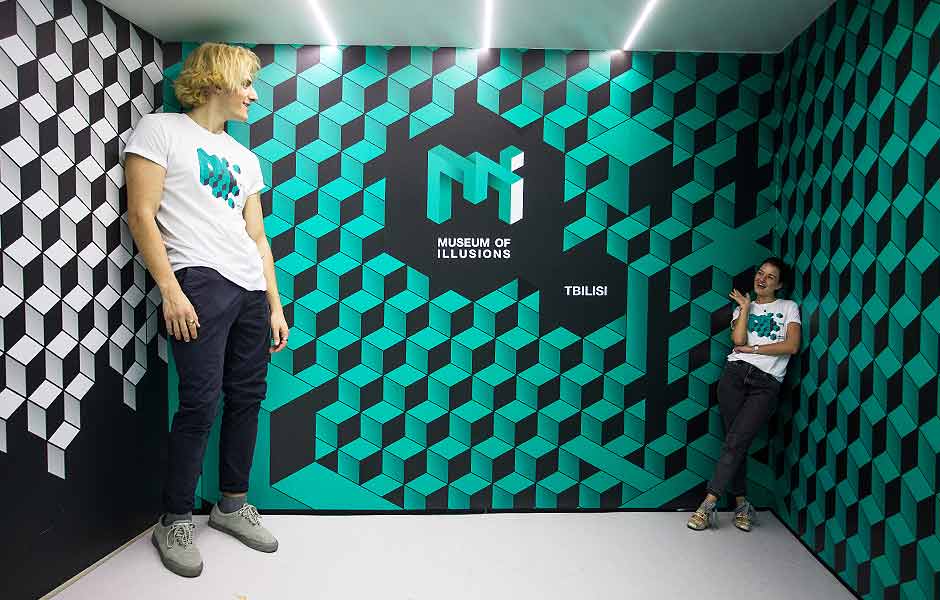
The Museum of Illusions is designed as an interactive visual experience rather than a collection viewed from behind glass. Visitors move through illusion rooms, experiment with installations and discover images that demonstrate how easily perspective and perception can be manipulated.

The museum divides its exhibits into three main categories:

  • Illusion rooms that alter your sense of balance, size or direction
  • Interactive installations that invite you to become part of the illusion
  • Optical images and holograms that change depending on your position and point of view

Some exhibits are playful and photogenic, while others explain why your eyes and brain do not always interpret the same visual information in the same way.

Main Illusion Rooms and Highlights

The exact selection of exhibits can change, but the museum’s official exhibit list includes several popular rooms.

Tilted Room

The Tilted Room uses angles and visual references to make a stable surface feel unbalanced. The room can briefly confuse your sense of orientation even when you know how the effect is created.

Vortex Tunnel

Inside the Vortex Tunnel, a rotating cylinder creates the impression that the floor is moving beneath you. The walkway itself remains stable, but the surrounding motion can make walking feel surprisingly difficult.

Visitors who are sensitive to dizziness or motion effects can choose to skip this experience.

Reversed Room

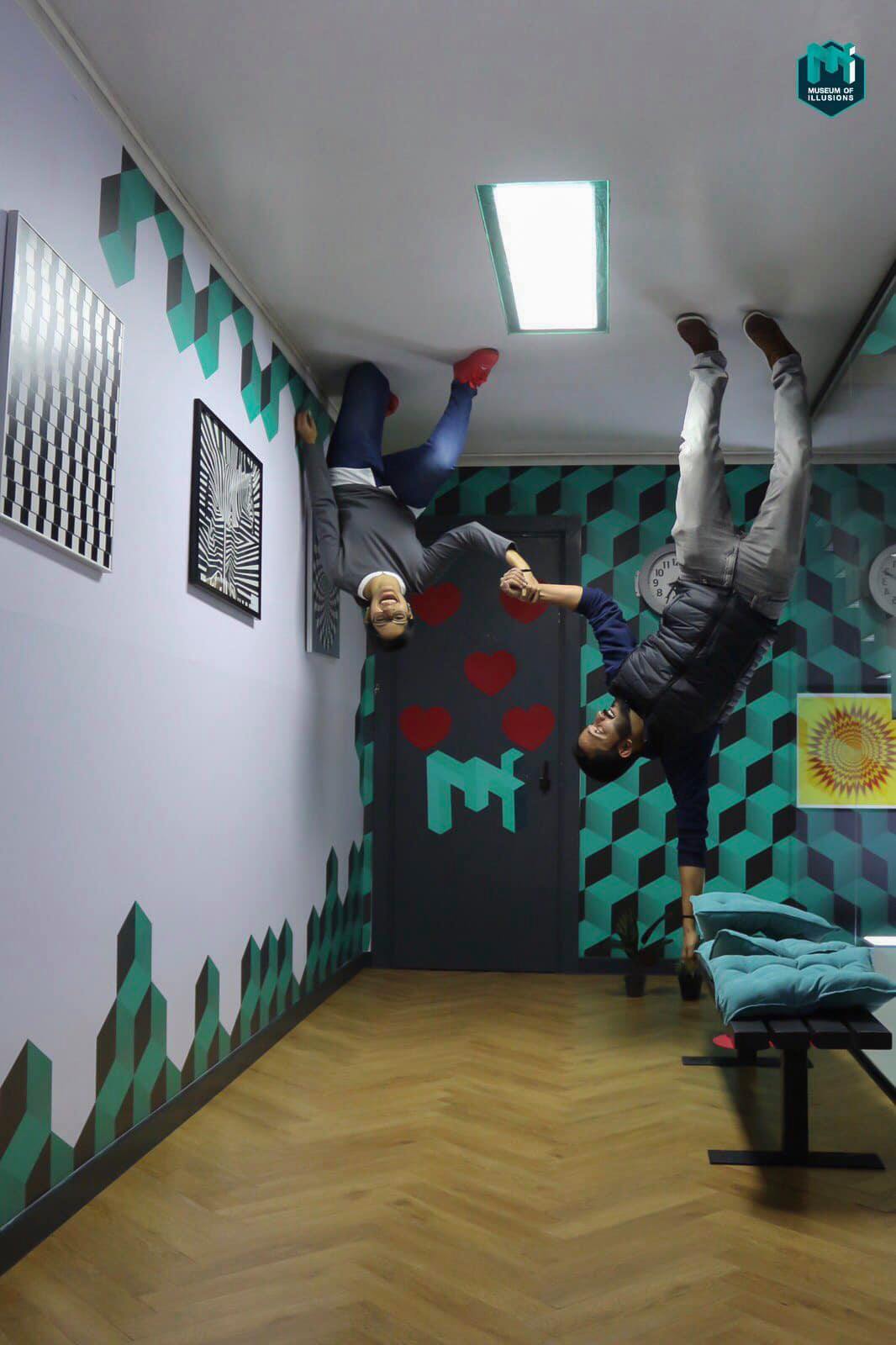
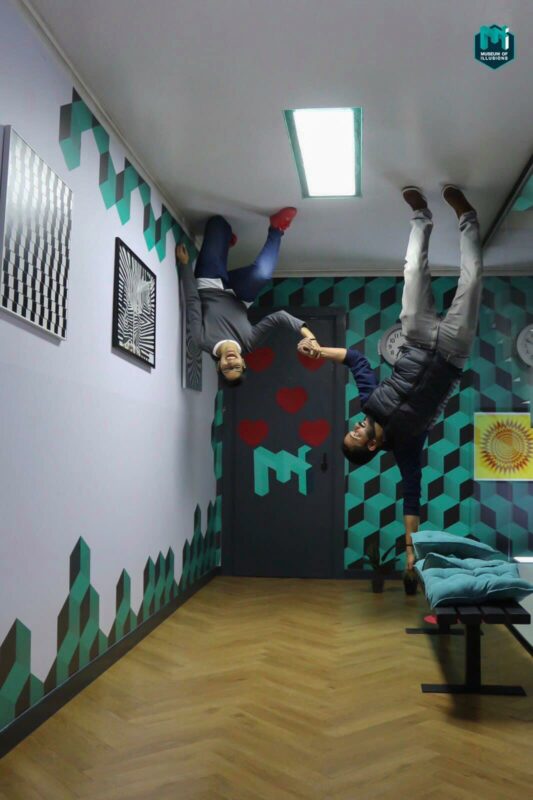
The Reversed Room turns an ordinary interior into a playful photo setting. With the correct camera angle, visitors can appear to stand on walls or hang from the ceiling.

Optical Images, Holograms and Installations

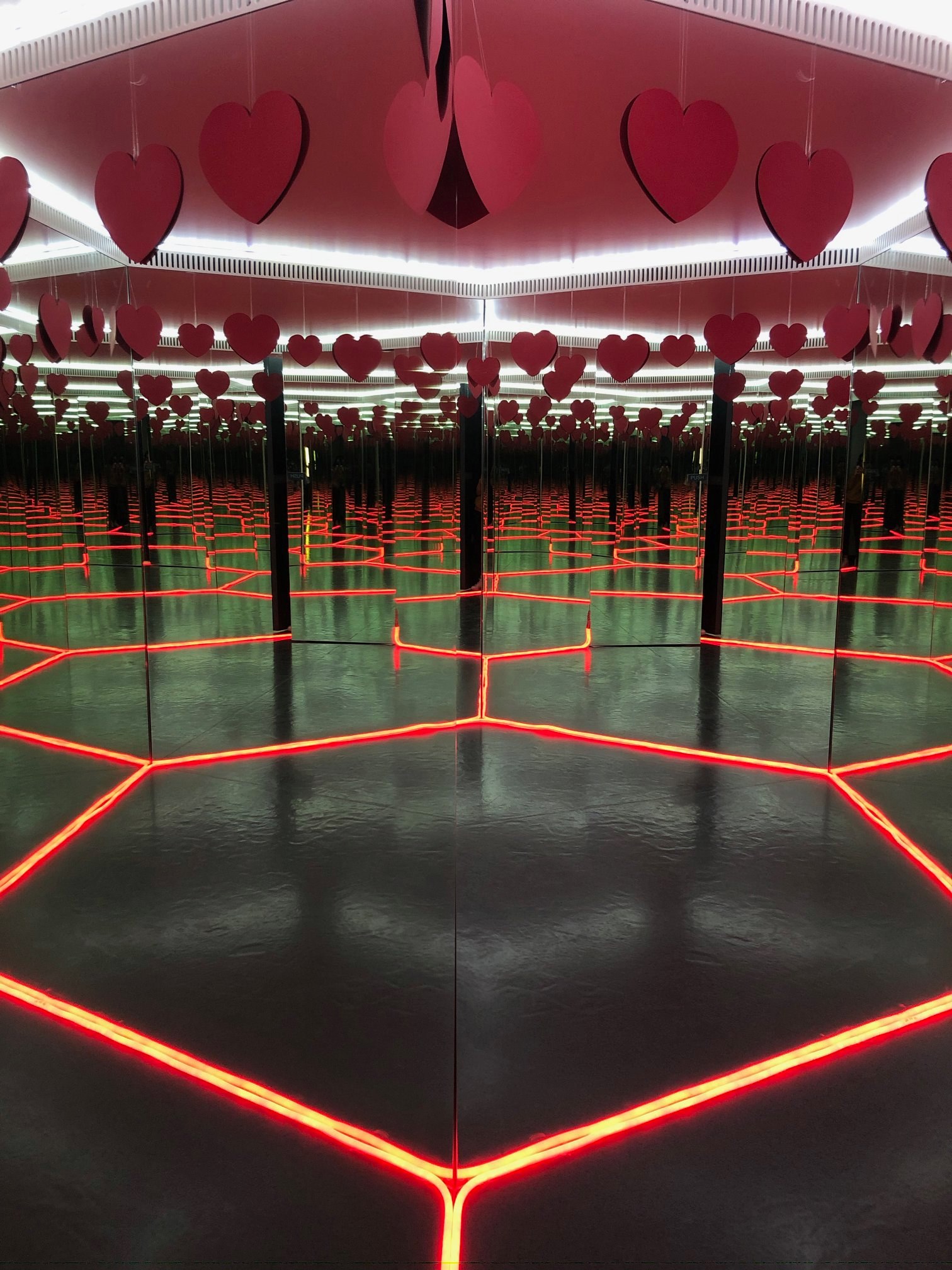
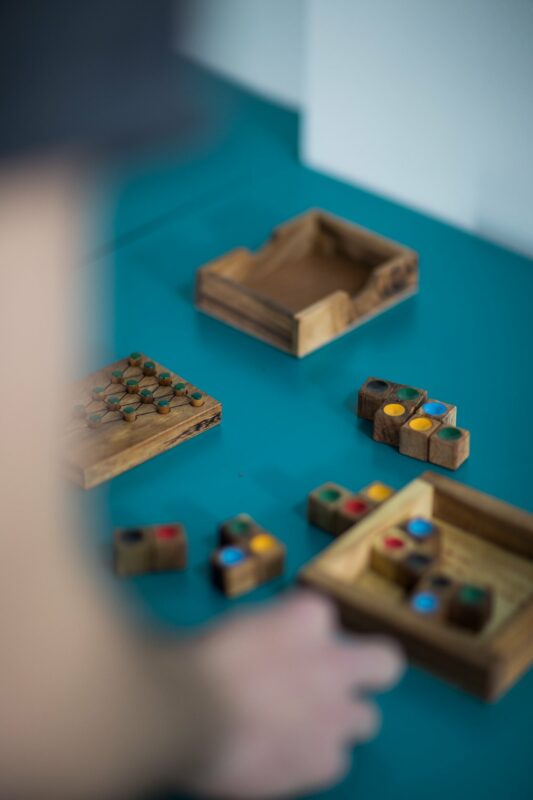
Throughout the museum, visual puzzles, holograms, mirrors and perspective tricks demonstrate how distance, colour, light and context influence what we think we see.

You can explore the current categories on the museum’s official exhibits page.

Is the Museum Suitable for Children?

Yes. The Museum of Illusions is suitable for families, and most exhibits are designed to be enjoyed by both children and adults. Younger visitors usually enjoy the interactive rooms and photo opportunities, while older children may also be interested in the explanations behind the illusions.

Children should remain supervised, particularly in rooms that affect balance or orientation. The experience is also enjoyable without children: couples and groups of friends often visit for the puzzles, unusual photographs and playful installations.

Photography Tips

Photography is an important part of the experience, so bring a charged phone or camera. Many illusions work best when photographed from a specific marked position.

For better results:

  • Visit with at least one other person, as several exhibits are easier to photograph with a companion
  • Follow the floor markings or staff instructions for the correct camera angle
  • Leave enough storage space on your phone before arriving
  • Take both portrait and landscape versions of your favourite scenes
  • Avoid blocking an exhibit for too long when the museum is busy

Staff members may be able to suggest the best position for certain photographs.

How Long Does a Visit Take?

Allow approximately 45–90 minutes for the Museum of Illusions Tbilisi. A quick visit may take less than an hour, while families and visitors who want to photograph every room will probably stay longer.

The museum works well as a shorter indoor stop between other Old Tbilisi attractions rather than a full-day activity.

How to Get to the Museum of Illusions Tbilisi

The museum is located at 10 Betlemi Street in the historic centre. Betlemi Street rises through the hillside neighbourhood above the lower Old Town, so expect a short uphill walk when approaching from Meidan or the river.

On Foot

Walking is usually the easiest option if you are already exploring Old Tbilisi. The museum is within walking distance of Meidan Square, the Betlemi neighbourhood, Shardeni Street and Lado Gudiashvili Square.

By Metro

Liberty Square and Avlabari are the two most practical metro stations for the wider Old Tbilisi area. From either station, continue on foot through the historic centre. The route includes slopes and may feel longer in hot weather.

By Taxi

Enter Museum of Illusions Tbilisi, 10 Betlemi Street as the destination in your taxi application. Streets in this part of the Old Town can be narrow, so the driver may stop a short walk from the entrance.

Accessibility

The museum’s official information describes the venue as accessible to elderly visitors, people with prams and people living with disabilities.

However, individual illusion rooms may involve unusual angles, strong visual motion or balance effects. Visitors with specific mobility, visual or sensory requirements should contact the museum before arrival to confirm access to the entrance and particular exhibits.

The surrounding Betlemi neighbourhood is hilly and includes sloping streets, which should also be considered when planning the route.

Combine the Museum with an Old Tbilisi Walk

The Museum of Illusions is not a historical museum, so it offers a very different experience from the streets and landmarks surrounding it. A good plan is to combine the indoor visit with a walk through the Betlemi neighbourhood and the lower Old Town.

Travellers who want historical context and local stories can also join the Old Tbilisi Free Walking Tour. The museum is not a scheduled stop on the tour, but its Old Town location makes it easy to visit independently before or after exploring the historic centre with a local guide.

What to See Near the Museum

Several important attractions can be combined with the museum in the same itinerary:

A convenient half-day route is to visit the museum, walk uphill through the Betlemi neighbourhood and continue towards the Mother of Georgia or Narikala Fortress. Alternatively, walk downhill towards Meidan Square and the sulfur baths.

Is the Museum of Illusions Tbilisi Worth Visiting?

The Museum of Illusions Tbilisi is worth considering if you enjoy interactive attractions, optical puzzles and creative photography. It is especially useful for families and for travellers who need a weatherproof activity in the city centre.

Visitors mainly interested in Georgian history or traditional art should not treat it as a replacement for Tbilisi’s historical museums. Its strength is entertainment: it offers a light, playful break from churches, monuments and long sightseeing walks.

Because the experience is relatively short and centrally located, it is easy to combine with other attractions rather than planning an entire day around it.

FAQ

How much are Museum of Illusions Tbilisi tickets?

The museum’s official visitor page currently lists non-citizen tickets at 50 GEL for adults and 40 GEL for children aged 4–18. A family ticket for two adults and two children costs 130 GEL, while children under four enter free. Check the official website before visiting because prices may change.

Is the Museum of Illusions open on Monday?

No. The official schedule lists Monday as the museum’s weekly closing day. It is open Tuesday through Sunday from 11:00 to 21:00.

How long do you need at the Museum of Illusions Tbilisi?

Most visitors should allow approximately 45–90 minutes. You may need longer when visiting with children or taking photographs at every exhibit.

Can I buy tickets at the entrance?

Yes. The museum’s official website currently says that visitors can buy tickets at the door. Check the official ticket page before visiting in case online booking or admission rules change.

Is the Museum of Illusions only for children?

No. It is designed for a wide range of ages and is also popular with couples, adults and groups of friends. Children will enjoy the interactive rooms, while adults may appreciate the visual puzzles and creative photo opportunities.

Can I take photographs inside?

Photography is a central part of the experience. Bring a charged phone or camera and follow the recommended viewing positions to make the illusions work correctly in photographs.

Is the Museum of Illusions wheelchair accessible?

The official museum information describes the venue as accessible. Because some illusion rooms use tilted surfaces or strong visual effects, contact the museum in advance when you need detailed information about a particular mobility or sensory requirement.

Final Visitor Tip

Visit with a companion if possible, as many exhibits are more enjoyable when someone can take your photograph. Allow up to 90 minutes, wear comfortable shoes for the hilly Old Tbilisi streets and check the official schedule and ticket prices shortly before arriving

Opening hours: Tuesday–Sunday, 11:00–21:00 Closed: Monday Adult ticket for non-citizens: 50 GEL Child ticket for non-citizens, ages 4–18: 40 GEL Family ticket for non-citizens, 2 adults and 2 children: 130 GEL Children under 4: Free

What are you interested in? Discover something nice

What are you interested in? Discover something nice